

Termites in Alabama: Types, Season, and How to Protect Your Home
Original Publish Date: October 13th, 2013 | Updated: July 16th, 2026
Many homeowners only think about termites in the spring, which experts across the U.S. call “termite season.” Alabamians, however, can face termite infestations in their homes year-round.
You see, here in the north of central Alabama, every season is hotter and more humid outside than you’d expect for the same season in other parts of the U.S. Termites do not just “die off” in the winter or summer here—they can be active, munching away at the studs holding up your home’s walls (or on any other wooden thing you’d rather keep than give to termites for dinner). There’s usually an abundance of softer wood here due to all the humidity and wet weather, in forests and around human homes; this is a termite’s favorite treat.
For all these reasons and more, controlling and eliminating termites in Alabama is serious—so much so that our state government runs numerous awareness programs.
So far, researchers have found four termite species in Alabama.
Formosan Subterranean Termites
Formosan subterranean termites first appeared in Alabama in the 1980s. Since that time, they have continued to spread county by county.
Formosan termite colonies tend to be very large. It’s not unheard of to see colonies with as many as 15 million termites. That means they can do a lot of damage.
Despite living together in huge colonies, you may not notice this species at first. Formosan termites tend to swarm at night once things have cooled off. They can also forage for up to 300 feet in the soil. Formosan termites tunnel underground to create a network of interconnected tunnels that enable the colony to work together like a well-oiled machine, with efficient communication, travel, and food transport.
The colonies have three castes: reproductive termites, soldiers, and workers. The reproducers are up to 15mm long, yellowish-brown in color, and you might see them swarming. The soldiers have dark orange heads with large mandibles and yellowish bodies. And the workers are the ones that eat away at wood structures.
Formosan subterranean termites reproduce in the spring. Females and males will pair up to lay anywhere between 15 and 30 eggs. In less than a month, the eggs hatch, and the mature reproductive termites will care for them. Within a month or two, the queen will lay more eggs, and the young reproductive termites will become the carers of the queen’s new brood.
The swarms are a common indicator that Formosan termites are around. Another obvious sign of a structural infestation is the presence of foraging tubes up to half an inch wide. They are an extension of the soil tubes outside.
Some years ago, there was an outbreak of Formosan termites in Alabama, largely because people were using railroad cross ties as landscaping timber. It was a perfect example of how any type of decaying wood will attract Formosan termites.
Eastern Subterranean Termites
Eastern subterranean termites are easier to spot because they are larger than most other species. At 10mm long, they are also the most common type of termite in the U.S.
This termite species will mate as early as February if it’s a warm winter. You’ll see them start to swarm during the day as temperatures rise closer to spring. Like other termite species, they have reproductive, soldier, and worker castes that build mud tubes around their cellulose source.
The workers are off-white, and the soldiers are yellowish with large jaws. Both workers and soldiers are about a quarter inch long. The reproducers are dark brown to black and up to half an inch in size.
Fortunately, it takes eastern subterranean termites years to do significant damage to wood structures. When they do increase in number, it’s usually the reproducers and the wings they shed during swarming that are noticed first.
Dark Southeastern Subterranean Termites
This type of termite is generally found in the east and south, although they’re less common than Formosan and eastern subterranean termites. Not surprisingly, dark southeastern subterranean termites are commonly mistaken for the latter.
Dark southeastern subterranean termites are smaller, but they can still do serious structural damage. Unlike other species, this termite usually swarms during the day in the early summer. Colonies of dark southeastern subterranean termites are comparatively small; however, if multiple colonies are in the same area, swarms can reach the millions.
As the name suggests, dark southeastern subterranean termites are dark in color, but they are fairly small at just 7–8mm in length. If there’s moisture around, that’s when you’ll see dark subterranean termites come out of the ground and start feasting. Typically, they chew on wood with 20% or more moisture.
Southeastern Drywood Termite
Unlike subterranean termites, southeastern drywood termites don’t need soil to live. Instead, they reside directly inside dry wood, making them the more likely type to infest attic framing, wooden furniture, hardwood floors, and other structural wood throughout your home.
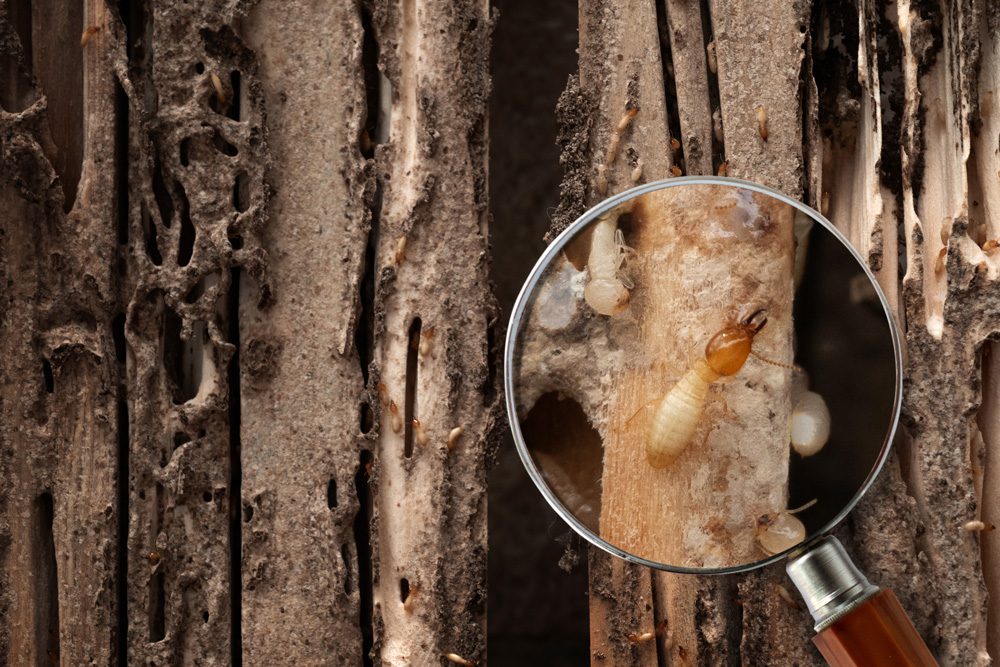
These termites are less common in Alabama than the three subterranean species, but they can still cause expensive damage over time because infestations are often difficult to spot early. Rather than building mud tubes underground, drywood termites tunnel through wood from the inside out, leaving behind small kick-out holes and tiny piles of pellet-shaped droppings called frass.
Southeastern drywood termites are typically light brown and about 12mm long. They swarm during warmer months, especially around lights at night. Because they stay hidden inside wood, homeowners may not realize there’s a problem until they notice warped wood, hollow-sounding walls, sticking doors, or discarded wings near windowsills.
Protect Your Alabama Home From Termites
With Alabama’s warm, humid climate, termites can stay active for much of the year. Whether you’re dealing with subterranean termites underground or drywood termites hidden inside wooden structures, early detection is key to preventing serious structural damage.
At Vulcan Termite and Pest Control, Inc., we’ve helped Alabama homeowners protect their properties from termites for four decades and counting. Our experienced team can identify termite activity, recommend the right treatment plan, and help you avoid costly repairs down the road. Call us today or send us a message to schedule a termite inspection and keep your home protected year-round.