

Telling the Difference Between Flying Ants vs. Termites
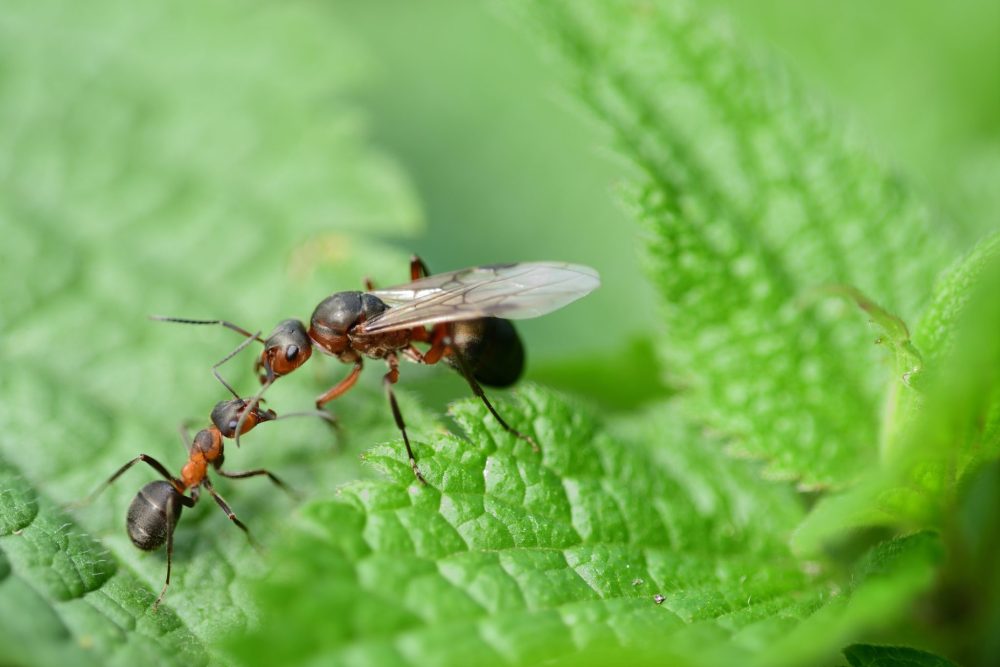
In the South, if you’ve ever tried enjoying an evening walk in early summer, you know you won’t be alone. It won’t be long before you’re swatting, ducking, and dodging winged pests coming at you from every which way. Should you be concerned for your house because they’re termites? Or simply annoyed because they’re flying ants? It’s hard to tell the difference since, at first glance, they both look alike. Additionally, both termites and flying ants swarm during warm months to mate and start new colonies.
Let’s put on our detective hats, grab a magnifying glass, and solve the flying ants vs. termites mystery.
Meet the Suspects: Flying Ants vs. Termites
Think of this as a bug ID card. Here’s how flying ants vs termites compare, side by side:
| Feature | Flying Ant | Termite |
| Waist | Narrow and pinched, like an hourglass | Straight and thick, no pinch |
| Antennae | Bent, or “elbowed” | Straight and bead-like |
| Wings | Two pairs; front wings longer than back wings | Two pairs, all the same length |
| Wing color | Transparent with a brown or amber tint and prominent veins | Completely clear/colorless or white |
| Body color | Black, brown, or reddish | Usually black or dark brown |
| Swarming season | Varies by species and weather; often late spring to early summer, primarily at dusk | Varies by species and location; commonly spring once temps hit ~70°F |
| Diet | Sugar, fats, proteins, crumbs | Cellulose: wood, paper, and drywall |
| Damage risk | Low; most don’t harm your home | High; serious structural damage |
The Magnifying Glass Test
If you happen to be able to catch one of these swarmers, grab a magnifying glass if you’ve got one handy and take a close look, paying attention to these three areas:
- Check its waist. Ants have a tiny pinched “belt” between their body sections. If the body is thick and straight all the way down, you’ve got a termite.
- Check the antennae. Ant antennae bend like an elbow. If they’re straight, like a string of tiny beads, it’s a termite.
- Check the wings. Ants have a big front pair and a smaller back pair. If all four wings are the same length, termite it is.
If all three answers point toward termite, and you found this one and others near your home, you may want to call pest control to ensure your home is protected.
Why the Difference Matters
We don’t mean to cause a panic, but termites are very bad for structures made of wood. So whereas flying ants are mostly a nuisance that swarm to mate and don’t really threaten your home, termites are a different story. The only exception would be for carpenter ants: They don’t eat wood, but they do tunnel into it to nest, which can weaken it over time. Check out our tips for getting rid of ants for good!
Termites, on the other hand, hide inside wood and soil, quietly feeding on your home’s structure, and a swarm is often the first sign you see of an invasion. In fact, termites cause more than $5 billion in damage across the U.S. each year, and most insurance plans won’t cover it, unfortunately. Other clues to watch for include:
- Piles of discarded wings near windows, doors, and light fixtures
- Pencil-thin mud tubes along your foundation
- Hollow-sounding or blistered wood
Not Sure What’s Swarming? Call Vulcan Termite
Still stumped after performing a physical inspection? Don’t worry; even the sharpest-eyed homeowners mix them up, but guessing wrong about termites can get expensive fast. That’s where we come in. We’ve been helping Birmingham homeowners identify swarmers and other invasive pests for over 60 years.
Give us a call today at 205-663-4200 or contact us online to request a free evaluation. From there, we’ll create and implement an effective strategy using our tried-and-true methods to keep you, your family, and your home pest-free and at peace.