

Can House Spiders Survive Outside? What Happens When You Evict These Arachnids
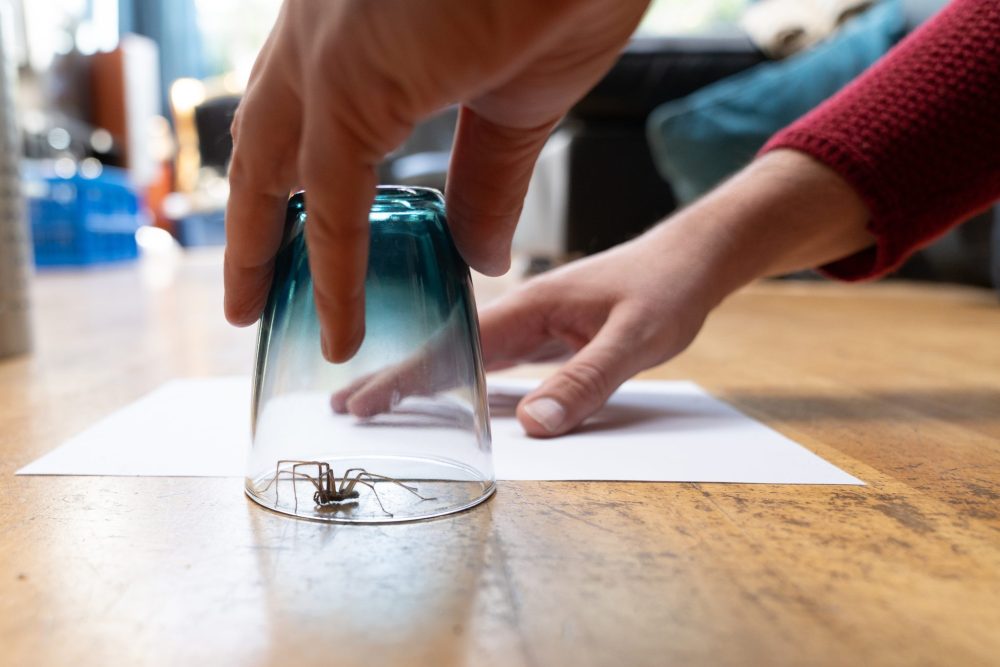
You walk into your bathroom ready to wash away the day with a nice warm bath. Only to find, to your surprise, someone else is already enjoying your ceramic spa: a spider. You run to grab a cup and a piece of paper, then head to the back door and set it free, giving yourself a pat on the back for doing the humane thing. Only, it might not be that nice of you after all.
Meet Your Eight-Legged Tenant
You may be surprised to find out that many of the spiders in your home didn’t wander in from the yard; they’re actually lifelong residents. Some house spider species have lived indoors since long before you or Vulcan Termite were even around, and according to arachnid specialist Rod Crawford, only about 5% of the spiders you see in a building have ever set one of their eight “feet” outside.
They also rarely live alone. According to Crawford, most house spiders belong to indoor populations of 50 to several hundred. (Surprise! You have roommates who aren’t on your lease.) Oh, and the spider in the tub? It probably didn’t crawl up through the drain. More likely, it was thirsty and came down looking for water.
Can House Spiders Survive Outside?
So, can house spiders survive outside? This is something you may be wondering since you found out your “guest” has been inside all along. Well, the answer depends on who you’re evicting:
- Local natives: A spider native to your area will likely do fine outdoors.
- Adapted indoor spiders: Many indoor spiders have adapted to your home’s steady temperatures, and may struggle or perish when moved outdoors, especially if the local climate differs from their native habitat.
- The in-betweeners: Some fall somewhere in between. For instance, in the Seattle area, giant house spiders have been found surviving in man-made shelters like brick piles and retaining walls.
And even if they can survive outdoors, they’ll still face a yard-full of other predators.
Check the Species Before You Respond
Not every spider inside is a true house spider. Wolf spiders, for example, usually live outdoors and wander inside while hunting. In that case, consider the removal a benevolent relocation.
Meet the Cobweb Spider Family
Many of the spiders lurking in your corners belong to one big family: Theridiidae, or better known as cobweb spiders. As you probably could guess, they’re named for the messy, tangled webs they weave in the high corners of home basements and garages. While they may all be related, they’re definitely not all alike:
- Harmful: Black widows belong to the Latrodectus genus, and their venom is dangerous.
- Harmless: The triangulate cobweb spider, the noble (or brown) false widow, and the common house spider (also called the American house spider) would much rather hide than tangle with you. The first two are known as “false widows,” and they typically only bite if they feel threatened/to protect themselves. Even then, it feels like a bee or wasp sting—if you even feel it at all.
The spiders we listed as harmless are also very shy, partly because they have terrible eyesight. You see, cobweb spiders are all but blind, so they rely on the vibrations of prey struggling in their webs to find their next meal. If they sense a giant human looming over them, they’re more likely to play dead (no, for real) to avoid getting squished than put up a fight.
In Alabama, you should look closely for another reason, too. Brown recluse spiders are found in our state, and black widows are common across the South. If you see these in your home, skip the eviction and call a pest control professional, like us.
Catch-and-Release or Leave Them Be?
If it’s a harmless species and it’s not bothering you, there’s no harm in moving the spider to somewhere else in your home, like the garage, or leaving it be. House spiders rarely bite, and they can be beneficial for getting rid of real pests like roaches, earwigs, mosquitoes, flies, and clothes moths.
When One Roommate Becomes a Crowd
Sometimes, house spiders can survive outside, but most are happiest right where they are. The real question is how many are living with you. Since one spider can indicate a hidden population, seeing them everywhere (especially when spiders increase in the fall) means it’s time for more than a DIY relocation.
That’s where we come in. Our team of pest solutions professionals at Vulcan Termite & Pest Control has proudly helped hundreds of families in Birmingham and nearby communities eradicate invasive pests on their properties, including spiders. And we would love to do the same for you!
Call us today at 205-663-4200 or contact us online to request our services. Our team would be happy to provide a free evaluation, then create and implement an effective strategy using our tried-and-true methods, so you and your family can enjoy a pest-free home.